Social media in healthcare is no longer optional — it is how patients find, evaluate, and trust providers. This guide breaks down the proven benefits, the real risks, and the best practices healthcare organizations must follow in 2026.
Social media in healthcare has moved from a nice-to-have experiment to a core patient-communication channel. Today, patients research symptoms, compare providers, read reviews, and book appointments — all before they ever pick up a phone. Hospitals, clinics, and healthcare brands that build a credible social media presence gain a measurable edge in patient acquisition, trust-building, and healthcare digital marketing. This guide covers everything: the real benefits, the genuine risks, and the actionable strategies that make the difference between a social media presence that grows your practice and one that creates problems.
Quick Summary
- Social media lets healthcare providers educate patients at scale through videos, infographics, and real-time posts.
- Consistent social presence builds brand authority, boosts local SEO signals, and increases patient inquiries.
- Misinformation, HIPAA compliance, and reputation management are the three biggest challenges to manage.
- Video content (Reels, YouTube shorts, doctor explainers) delivers the highest engagement in the healthcare niche.
- A documented content strategy, compliance review process, and crisis response plan are non-negotiable in 2026.
What Is Social Media in Healthcare?
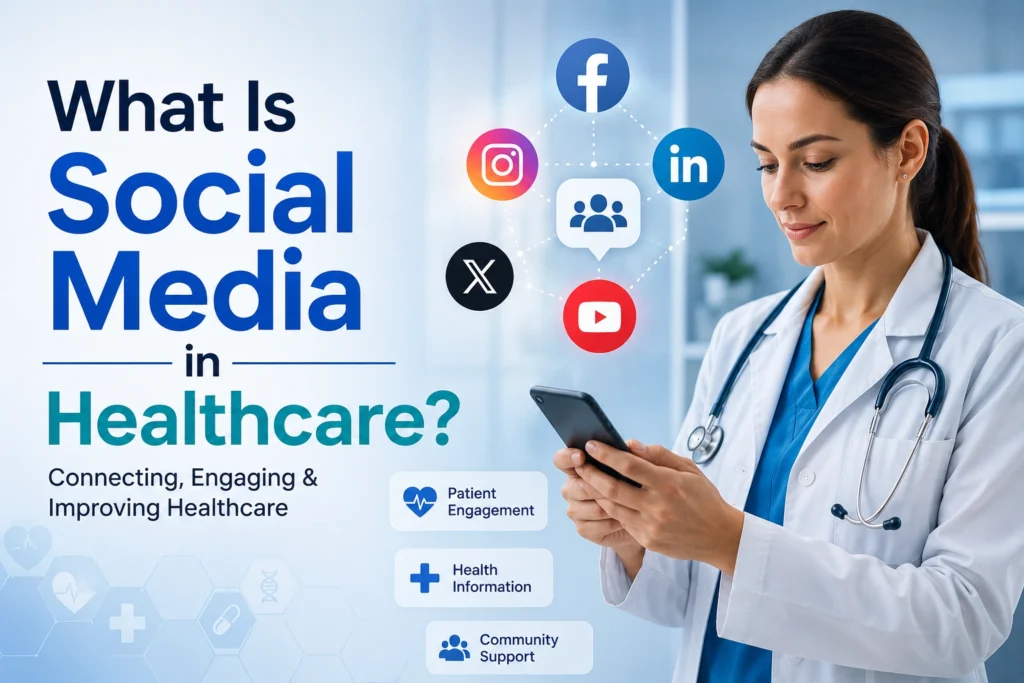
Social media in healthcare refers to the strategic use of platforms — Facebook, Instagram, LinkedIn, YouTube, and X — by hospitals, clinics, pharma brands, and individual practitioners to educate patients, build brand authority, communicate health information, and drive patient acquisition.
It is distinct from general healthcare advertising because the focus is on engagement rather than one-way promotion. A hospital running targeted Facebook ads to promote a health camp is doing healthcare advertising. That same hospital building a community of patients who share recovery stories, ask questions, and engage with doctor videos — that is healthcare social media marketing at its best.
The key platforms each serve a different purpose. Facebook excels at community building and targeted awareness campaigns. Instagram dominates for visual patient education and Reels. LinkedIn supports B2B healthcare networking and professional credibility. YouTube is the go-to channel for long-form doctor education videos. X (Twitter) enables real-time public health communication during emergencies and disease outbreaks.
What Are the Biggest Benefits of Social Media in Healthcare?
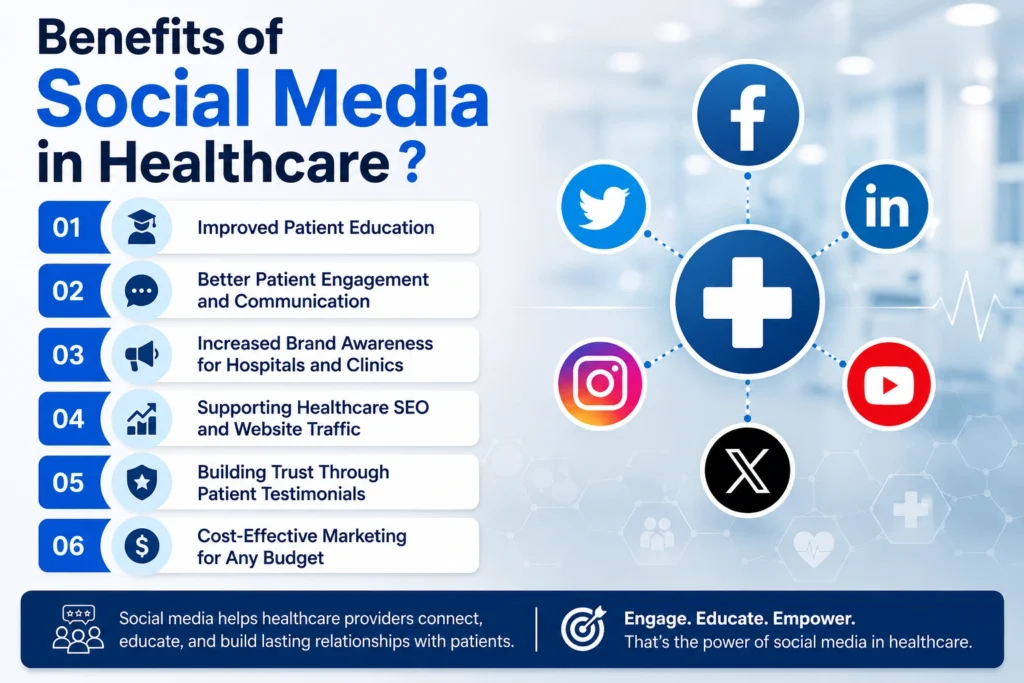
Social media in healthcare delivers measurable benefits across patient education, engagement, brand awareness, and cost-effective marketing — making it one of the highest-ROI channels available to healthcare organizations today.
Improved Patient Education
Platforms like YouTube and Instagram allow doctors to simplify complex medical information into short, accessible content. Symptom awareness posts, myth-busting videos, and preventive care tips reach audiences that traditional brochures never could. Visual content such as infographics and short videos is estimated to increase health content engagement by up to 40% compared to plain text posts.
High-performing educational content formats include symptom awareness posts, preventive care tips, myth vs. fact carousels, and FAQ-based doctor videos. These formats work across platforms because they give genuine value — which is what patients are searching for.
Better Patient Engagement and Communication
Patients who feel connected to their healthcare provider are more likely to follow treatment plans, return for follow-up care, and refer others. Social media enables direct, real-time communication through comments, DMs, and live Q&A sessions. 51% of patients report that social media interactions with healthcare providers positively influence their perception of care quality.
Practical tools include appointment reminder posts, health camp announcements, seasonal vaccination drives, and live sessions with specialists. When patients feel heard on social media, that trust transfers directly into the clinical relationship.
Increased Brand Awareness for Hospitals and Clinics
For local healthcare businesses — clinics, diagnostic centers, specialist practices — social media is the most cost-effective way to become the recognized name in their area. Consistent posting, branded visuals, and community engagement all compound into authority and recall. Over time, this visibility drives more branded searches and ultimately more direct patient inquiries.
Healthcare companies are currently experiencing the highest weekly follower growth on Facebook of any industry at 10.11% per week. That rate of organic growth is an opportunity few other marketing channels can match at zero media cost.
Supporting Healthcare SEO and Website Traffic
Every social post that links to a healthcare blog or service page contributes to referral traffic and brand search volume — two indirect SEO signals that Google values. A strong social media presence ensures your content gets distributed faster, earns more backlinks, and stays visible in the discovery phase of the patient journey.
For healthcare brands investing in SEO, social media and search optimization are complementary — not competing — strategies. If you want to understand how they work together, read our post on Why Social Media Marketing Is Essential for 2026.
Building Trust Through Patient Testimonials
Authentic patient stories are among the most persuasive content in healthcare marketing. Patient testimonial videos on social media generate 3.8× more engagement and 2.1× more shares than any other content type. Video testimonials give prospective patients a peer-level reason to trust before they ever walk through the door.
One critical note: always obtain explicit written consent from patients before publishing any testimonials. HIPAA regulations apply even to positive stories, and a consent process also protects your organization during audits.
Cost-Effective Marketing for Any Budget
Unlike TV spots or print campaigns, social media allows healthcare brands to run targeted campaigns on small budgets. A local clinic in Pune can run a Facebook awareness campaign for a diabetes screening camp and reach thousands of relevant adults in their catchment area for a fraction of traditional media cost.
| Channel | Average Cost | Targeting Precision | Result Tracking |
|---|---|---|---|
| Print / Outdoor | High | Low | Difficult |
| TV / Radio | Very High | Low | Difficult |
| Social Media (Organic) | Low | Medium | Good |
| Social Media (Paid) | Medium | Very High | Excellent |
What Are the Biggest Challenges of Social Media in Healthcare?
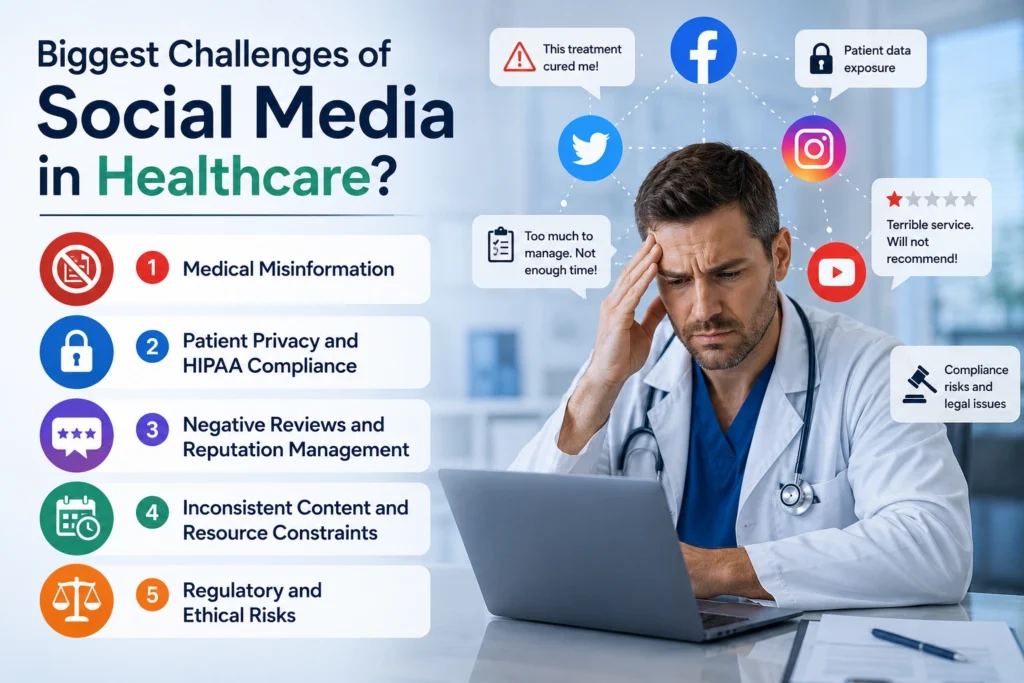
The main challenges of social media in healthcare are medical misinformation, patient privacy and HIPAA compliance, online reputation management, inconsistent content quality, and regulatory risk — all of which require proactive policies rather than reactive fixes.
Medical Misinformation
False health claims spread rapidly on social platforms. A viral video recommending an unproven treatment can reach millions before it is flagged. Healthcare organizations have a responsibility — and a competitive advantage — in being the trusted, fact-checked voice in their community. Every piece of content should pass through a licensed medical professional before posting. Platforms like Instagram now label health misinformation, but prevention is far more effective than correction.
Patient Privacy and HIPAA Compliance
67% of healthcare marketers cite privacy regulations as their biggest social media challenge. Any content that identifies a patient — even indirectly through a case description — can constitute a HIPAA violation. Healthcare brands must establish clear protocols for: patient consent before sharing any case content, secure channels for patient-provider communication, and staff training on what cannot be posted.
This is not an area to figure out after a problem occurs. Build the compliance process before you build the content calendar.
Negative Reviews and Reputation Management
One critical post from a dissatisfied patient can reach thousands of potential patients within hours. Healthcare organizations need a documented reputation management protocol: acknowledge negative feedback promptly and professionally, resolve legitimate complaints through private channels, and actively encourage satisfied patients to share their experiences online.
Inconsistent Content and Resource Constraints
Healthcare content requires clinical accuracy, which means it cannot simply be delegated to a general marketing assistant. Many hospitals and clinics struggle to maintain consistent posting because doctors are busy and content review takes time. The solution is a structured content calendar with pre-approved post templates, batched content creation sessions, and a lightweight approval workflow that does not require a doctor to review every caption.
Regulatory and Ethical Risks
Healthcare advertising guidelines vary by country, specialty, and platform. Before-and-after images, treatment outcome claims, and pharmaceutical promotions all carry specific rules. Violating these — even accidentally — can result in regulatory action, platform penalties, or reputational damage. Always consult legal or compliance counsel when planning a new campaign type.
How Should Healthcare Organizations Build a Social Media Strategy?
A strong healthcare social media strategy combines educational content (60%), patient engagement content (25%), and promotional content (15%) — reviewed for clinical accuracy, scheduled consistently, and measured against patient acquisition metrics.
Step 1 — Choose Platforms Strategically
Do not spread resources across every platform. A general practice clinic benefits most from Facebook (community and local reach) and Instagram (visual education). A hospital targeting B2B referrals should prioritize LinkedIn. A specialist targeting younger patients should consider YouTube and Instagram Reels. Start with two platforms done well rather than six done poorly.
Step 2 — Build a Content Calendar
Plan content at least two weeks in advance. A practical content mix: 60% educational (disease awareness, preventive care, doctor tips), 25% engagement (patient stories, polls, Q&A, community events), 15% promotional (service announcements, special programs, health camps). This ratio keeps your audience engaged without making every post feel like an advertisement.
Step 3 — Publish Video-First Content
Healthcare video content significantly outperforms static posts. Videos receive 10× more engagement than text posts in the healthcare sector. Short-form Reels explaining one health tip in 30–60 seconds are high-performing and low-cost to produce. YouTube videos from doctors — answering common patient questions — build long-term search visibility on both YouTube and Google simultaneously.
Step 4 — Monitor, Respond, and Improve
Track engagement rate, website clicks from social, and appointment inquiry volume each month. Respond to all comments and DMs within 24 hours. Review what performed well and replicate it. Social media strategy is an iterative process — what resonates with your specific patient community becomes clearer over time.
For healthcare brands that want a professional content and strategy partner, explore InnoClick Solutions’ Social Media Advertising Services — built for businesses that need measurable results from every post.
What Does the Future of Social Media in Healthcare Look Like?
The future of social media in healthcare is being shaped by AI-personalized content, video-first platforms, doctor personal branding, and the integration of social media with telemedicine patient pathways — all accelerating rapidly through 2026 and beyond.
AI-powered content tools are already helping healthcare teams produce compliant, personalized patient education at scale, with AI-assisted content delivery speeding production by 3–6× in some organizations. Healthcare influencers — doctors and specialists who build personal brands on social — are becoming a significant channel for patient discovery. And as telemedicine grows, social media is becoming the first touchpoint that directs patients into virtual consultation funnels.
Healthcare organizations that build their social media authority today will be the default providers patients discover tomorrow — both on traditional search and on AI-powered platforms like ChatGPT and Google’s AI Overviews.
If you want to understand how search and social media work together for long-term patient acquisition, read our breakdown of SEO vs. Google Ads: Which Is Better for Business?
Conclusion
Social media in healthcare is one of the most powerful and most mismanaged marketing channels available to hospitals and clinics today. The benefits — patient education, engagement, brand authority, and cost-effective growth — are real and measurable. So are the risks: misinformation, compliance violations, and reputation damage. The difference between the two outcomes is a documented strategy, a clinical review process, and consistent execution. Start with two platforms, build your content calendar around patient value, and measure results monthly. Healthcare providers that get this right now are building patient trust that compounds for years.
Also Have a Look:
How Hospitals, Clinics & Doctors Get Found Online in 2026?
On-Page SEO for Healthcare Industry
Best Healthcare SEO Agencies in Pune
FAQ’s:
Q1: How does social media help the healthcare industry?
Social media helps healthcare organizations educate patients at scale, increase brand visibility, improve patient engagement, and drive more appointment inquiries — all at a lower cost than traditional marketing channels.
Q2: What are the biggest challenges of social media in healthcare?
The three biggest challenges are medical misinformation (false health claims spreading virally), patient privacy and HIPAA compliance violations, and managing negative reviews that can damage institutional reputation.
Q3: Which social media platform works best for healthcare marketing?
Instagram offers the highest engagement rate (3.7%) for healthcare content, making it ideal for visual education. Facebook delivers the highest weekly follower growth (10.11%) and is best for community building and local awareness campaigns.
Q4: Can social media marketing improve patient acquisition for hospitals?
Yes. Consistent, educational social media content builds trust over time, increases branded searches, and drives direct patient inquiries. Providers active on social media see 3–7× higher patient trust compared to those without a social presence.
Q5: Is social media compliant and safe for healthcare organizations?
Social media is safe for healthcare organizations when proper protocols are in place — including patient consent policies, a clinical content review process, staff training on HIPAA rules, and a documented crisis response plan.
Q6: What are social media strategies in healthcare?
Healthcare social media strategies include sharing educational content, promoting preventive care, engaging patients through Q&A sessions, showcasing patient testimonials, building brand trust, running targeted awareness campaigns, collaborating with medical influencers, and using paid ads for service promotion. Consistency, HIPAA compliance, and empathetic messaging are essential for building credibility and long-term patient relationships.
Q7: How can social media be used in healthcare?
Social media helps healthcare providers educate audiences on symptoms and treatments, promote health campaigns, share updates on services or doctors, engage patients through comments and messages, build community trust, and manage reputation via reviews. It also supports telehealth promotion, appointment reminders, and crisis communication during public health emergencies.
Q8: How do patients use social media in healthcare?
Patients use social media to research symptoms, find doctors, read reviews, join support groups, and follow health influencers or organizations for reliable information. They also share personal health journeys, ask questions in communities, seek second opinions, and stay updated on new treatments, wellness tips, and healthcare provider announcements.

Shivraaj Dhaygude is a Pune-based SEO Specialist with over 6+ years of hands-on experience helping local businesses dominate Google Search and AI-powered results. He specializes in Local Pack optimization, Google AI Overview visibility, and Generative Engine Optimization (GEO) — an emerging discipline focused on appearing inside AI-generated search answers.
Shivraaj has personally led SEO campaigns for 50+ SMBs across Pune and Maharashtra, consistently delivering top-3 local pack rankings and measurable increases in organic leads. His approach combines technical SEO foundations with AI search readiness strategies, giving clients a competitive edge as search evolves.
He writes about local SEO, GEO, and AI search trends based on real client data and ongoing experimentation — not theory.