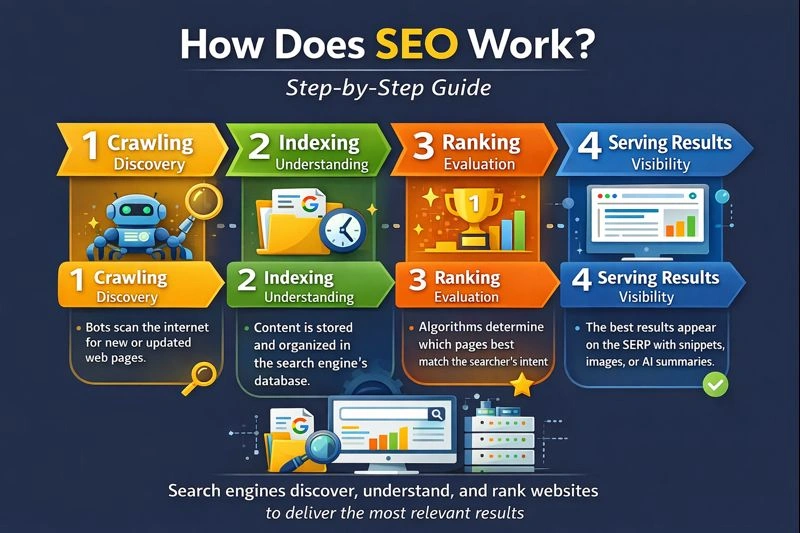
SEO works by helping search engines discover, understand, evaluate, and trust your website so it appears when users search for relevant topics. Google crawls your pages, indexes your content, analyzes relevance and quality, measures user engagement, and ranks pages based on usefulness, authority, and experience.
This process matters because top organic rankings get the majority of user attention and clicks. The #1 organic result earns 39.8% of all clicks, followed by 18.7% for the second position and 10.2% for the third on search engine results pages (SE Ranking, 2025). When done right, SEO delivers long-term organic traffic, leads, and brand visibility without paying for ads. When done right, SEO delivers long-term organic traffic, leads, and brand visibility without paying for ads.
How Does SEO Actually Work?
SEO works in four connected stages:
1.Google discovers your page
2.Google understands what your page is about
3.Google evaluates how useful and trustworthy it is
4.Google ranks it based on relevance and user satisfaction
If your content solves the searcher’s problem better than others, Google rewards it with higher visibility.
Think of SEO as aligning what users want, what Google understands, and what your website delivers.
What Is SEO? (With a Real-Life Example)
SEO (Search Engine Optimization) is the process of improving your website so it appears in organic search results when people search for information, products, or services.
Example:
You own a bakery in Pune.
When someone searches:
-
“best bakery near me”
-
“custom cakes in Pune”
SEO helps your site appear by:
-
Optimizing content with relevant keywords
-
Improving website speed and mobile experience
-
Optimizing Google Business Profile
-
Earning customer reviews and local citations
Result:
You get consistent local customers without paying for ads.
How Search Engines Work?
(Crawl → Index → Rank → Serve)
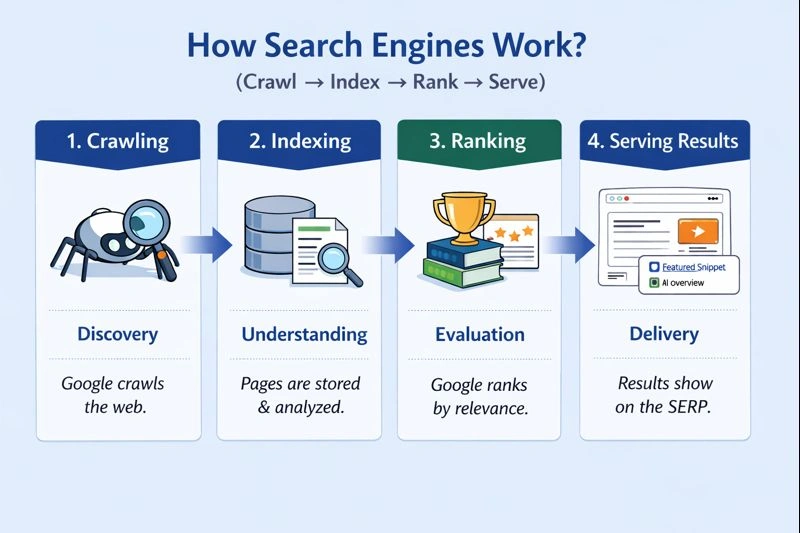
Search engines work like digital librarians.
Step-by-Step Process:
1. Crawling
Googlebot scans the web to discover new or updated pages.
2. Indexing
Content is analyzed and stored in Google’s database.
3. Ranking
Algorithms evaluate relevance, quality, authority, and user experience.
4. Serving Results
Google displays the most helpful results on the SERP, including AI Overviews, featured snippets, and organic links.
| Stage | Purpose | What Google Checks |
|---|---|---|
| Crawling | Discovery | Links, sitemaps |
| Indexing | Understanding | Content, context |
| Ranking | Evaluation | Relevance, trust |
| Serving | Visibility | Best answer for intent |
Not every search leads to a website visit. About 26% of all searches result in zero clicks, meaning users get answers directly on the results page without visiting any site (Forbes Advisor SEO Stats). This is why clear answers, structured content, and eligibility for rich results are now essential parts of how SEO works.
How Google Ranks Websites (What Really Matters)
Google ranks pages based on usefulness, not tricks.
Key Ranking Factors Explained:
1. Search Intent Match
Google prioritizes pages that best satisfy the intent behind a query.
Types of intent:
-
Informational: “how does SEO work”
-
Commercial: “best SEO agency”
-
Transactional: “SEO services in Pune”
2. Content Quality & E-E-A-T
Google favors content that shows:
-
Real experience
-
Subject expertise
-
Brand authority
-
Trustworthiness
Clear explanations, original insights, and accurate information matter.
3. User Experience Signals
Google evaluates:
-
Page speed & Core Web Vitals
-
Mobile usability
-
Visual stability
-
Easy navigation
4. Backlinks & Brand Authority
High-quality links from trusted sites act as credibility signals.
5. Engagement & Behavior
If users stay, scroll, and interact, Google sees your page as helpful.
6. Freshness & Updates
Updated content ranks better, especially in evolving industries.
7. Structured Data & Context
Schema helps Google understand your content and improves eligibility for AI Overviews and rich results.
The 3 Types of SEO
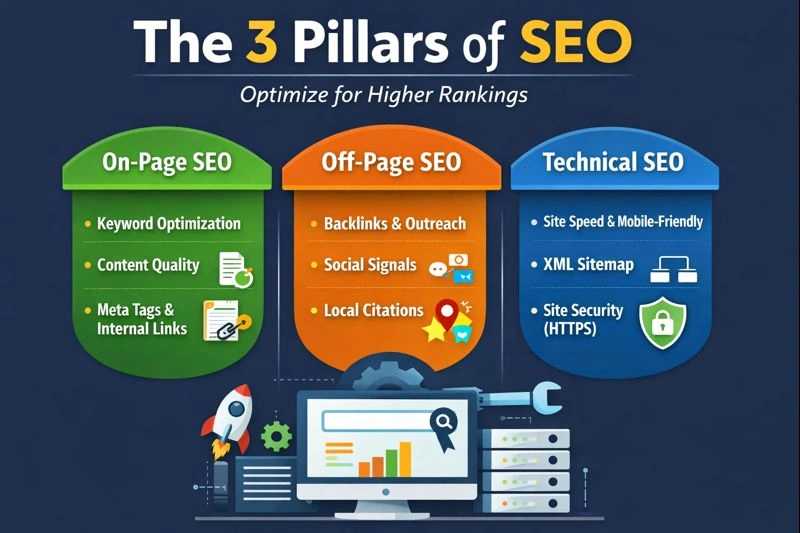
1. Technical SEO (Crawl & Performance)
Focuses on:
-
Site speed
-
Mobile friendliness
-
Core Web Vitals
-
HTTPS
-
XML sitemaps
-
Structured data
2. On-Page SEO (Relevance & Clarity)
Focuses on:
-
Search intent alignment
-
Title tags and headings
-
Internal linking
-
Content structure
-
Image optimization
3. Off-Page SEO (Authority & Trust)
Focuses on:
-
Backlinks
-
Brand mentions
-
Reviews
-
Digital PR
-
Local citations
How SEO Works Step-by-Step in Real Life
-
You publish optimized content
-
Google crawls and indexes it
-
Your page ranks initially on page 2 or 3
-
Users engage with the content
-
Google measures satisfaction
-
Rankings improve over time
SEO is cumulative. Results grow as trust builds.
How Long Does SEO Take to Work?
SEO is a long-term strategy.
Typical timeline:
-
1–2 months: Indexing and early impressions
-
3–6 months: Ranking and traffic growth
-
6+ months: Consistent leads and authority
Timeline depends on:
-
Competition
-
Content quality
-
Technical health
-
Backlink strength
How SEO Works in the Age of AI Overviews
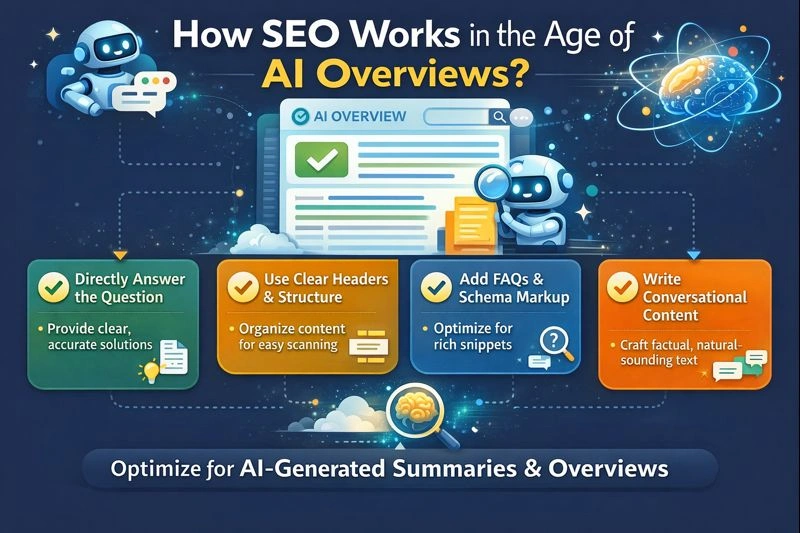
Modern SEO is not just about rankings.
To appear in AI Overviews:
-
Answer questions directly
-
Use clear definitions
-
Structure content with headings
-
Add FAQs and schema
-
Write conversational, factual content
AI systems prefer:
-
Well-structured explanations
-
Trusted sources
-
Easy-to-extract answers
How to Measure SEO Success (What Professionals Track)
Key SEO metrics:
-
Impressions & CTR (Search Console)
-
Organic traffic (GA4)
-
Keyword visibility
-
Indexed pages
-
Conversions and leads
SEO success is measured by business outcomes, not just rankings.
SEO vs Paid Ads (Quick Comparison)
SEO vs SEM Ads: SEO builds long-term, compounding organic growth, while paid ads deliver instant visibility that stops the moment the ad budget ends.
| SEO | Paid Ads |
|---|---|
| Long-term growth | Instant visibility |
| Compounding traffic | Stops when budget ends |
| Higher trust | Lower trust |
| Cost-effective | Expensive over time |
Best strategy: Use SEO for sustainable growth and ads for short-term goals.
Common SEO Mistakes Beginners Make
-
Ignoring search intent
-
Poor mobile experience
-
Slow website
-
No content updates
-
No tracking or analytics
Focus on usefulness, not shortcuts.
Popular SEO Tools Professionals Use
-
Google Search Console
-
Google Analytics 4
-
Ahrefs / Semrush
-
Screaming Frog
-
RankMath / Yoast
FAQs:
What is SEO and why is it important?
SEO helps websites rank higher in search results, driving organic traffic, trust, and long-term business growth.
How do search engines work?
They crawl web pages, index content, and rank results based on relevance, quality, and user experience.
What are the three types of SEO?
Technical SEO, On-Page SEO, and Off-Page SEO.
How long does SEO take?
Most websites see results in 3 to 6 months with consistent optimization.
Why does SEO fail?
SEO fails when sites ignore search intent, user experience, and content quality.
Final Thoughts
SEO is not about gaming Google.
It is the process of creating reliable, helpful content that search engines and users can consistently trust.
Based on practical experience optimizing websites across competitive industries, SEO results improve when three fundamentals are aligned: clear search intent coverage, technically sound websites, and content written with real subject-matter understanding. Pages that demonstrate experience, accuracy, and transparency are more likely to earn long-term visibility in organic results and AI-generated summaries.
When a website fails to gain traffic, rankings, or leads, the root cause is rarely SEO as a channel. In most cases, it comes from misaligned intent, shallow or outdated content, weak technical foundations, or inconsistent optimization practices.
SEO works when it is approached as a structured, evidence-based process focused on user value, factual clarity, and ongoing improvement — the same signals Google and generative search systems rely on to evaluate trust and relevance.

Shivraaj Dhaygude is an SEO Specialist with 6+ years of experience optimizing local businesses for AI-powered search. He specializes in Google AI Overview optimization, local pack rankings, and GEO (Generative Engine Optimization). Shivraaj has helped 50+ Pune-based businesses achieve top 3 local pack positions.