

SEO wins on ROI almost every time you run the numbers — about $7.48 back per $1 spent, against roughly $2-3.60 for PPC. The catch is patience: it takes 6-12 months to start paying out, while PPC, social, and email each solve a different problem in the meantime. Nobody serious picks just one channel for 2026; the question is which order to build them in…
Key Facts / Metrics:
- Organic search drives an estimated 53% of all website traffic, more than any other channel
- SEO’s average ROI sits around 748% ($7.48 returned per $1 spent) versus PPC’s roughly 200% ($2 per $1)
- SEO leads cost about $31 on average versus $181 for PPC leads — a 5.8x cost advantage
- The #1 organic Google result earns roughly 39.8% CTR, more than positions 3–10 combined
- SEO conversion rates average 14.6%, compared with 3.75% for PPC traffic
- PPC still wins on speed: it can generate clicks and leads within hours of launch, versus 6–12 months for SEO to mature
- 87% of industries saw PPC cost-per-click rise year-over-year in 2025, squeezing paid budgets
- 70% of marketers rank SEO as their most effective long-term traffic driver
Every business eventually has to decide where the next marketing dollar goes, and the honest answer is messier than “SEO is better” or “just run ads.” Each channel behaves differently — some buy attention by the click, others build something that keeps paying you back long after you stop touching it. Below is how SEO actually stacks up against PPC, social, content, and email, with the numbers behind each comparison.
What Is SEO and How Does It Differ From Other Channels?
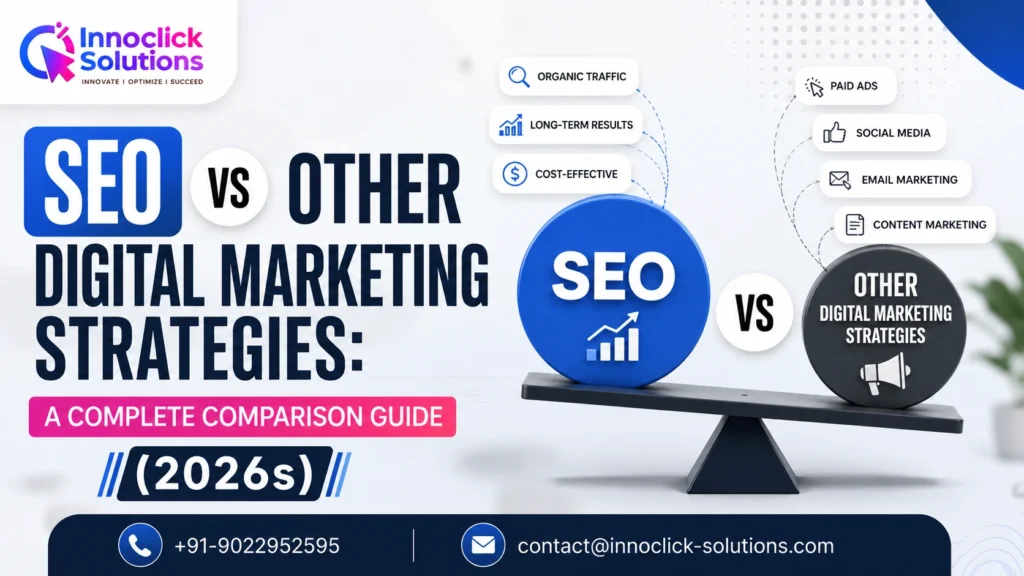
SEO is the practice of shaping a site’s content, structure, and authority so it shows up in organic search results — no per-click fee required. The core difference from paid channels: SEO earns visibility instead of renting it. A page that ranks well can keep pulling in traffic for years without another dollar spent on it.
PPC, paid social, and display ads work the opposite way. They buy placement directly, and the moment the budget runs out, so does the traffic. Content marketing sits somewhere in between — it feeds SEO but also gets reused in email and social. Email, meanwhile, nurtures people you already have, no algorithm involved.
Where each channel falls on that rent-versus-own spectrum is the first thing to understand before building a strategy, and we go deeper on it in our How Does SEO Work guide.

Why Does SEO Usually Beat PPC on ROI?
SEO tends to out-earn PPC because the cost is front-loaded — you pay for content and technical work once, and the traffic keeps showing up after. Average SEO ROI lands around 748%, against 200-360% for PPC, and that gap widens the longer a campaign runs.
The reason isn’t mysterious. PPC is an auction, and auctions get more expensive over time — 87% of industries saw their average cost-per-click rise in 2025 alone. SEO works the other way: a page that takes months to rank can then generate leads for years with little more than upkeep. That’s also why SEO leads run roughly $31 versus $181 for PPC, a real cost gap, not a rounding error.
That said, ROI alone doesn’t make the decision for you. Speed, predictability, and your industry’s competitiveness all matter too. If you’re weighing both, it helps to understand the technical work SEO actually requires — we cover that in the Technical SEO Guide.
How Do SEO and PPC Compare on Speed?
SEO is slow but compounds; PPC is fast but stops the second you stop paying. SEO generally needs 6-12 months before you see real movement, while PPC can put clicks on the board within hours — which makes it the better pick for time-sensitive launches or promotions.
The conversion numbers back this up too: SEO traffic converts around 14.6% of the time, almost four times PPC’s 3.75%, largely because people trust organic results more. But PPC earns its keep elsewhere — testing messaging, validating demand, or covering the traffic gap while your SEO content gets indexed. Most agencies run both for the first 6-12 months, then shift spend toward organic as rankings settle in.
Local businesses face a different timeline than national ones here — our Local SEO Services guide covers what to expect with “near me” searches specifically.
How Does SEO Compare to Social Media Marketing?
SEO captures demand that already exists; social media creates demand that didn’t. SEO reaches people actively typing in a search box looking for a solution. Social reaches people scrolling, not searching — which means the two channels rarely compete for the same intent.
Organic search still accounts for around 53% of all web traffic, the largest single source by a wide margin, while social platforms convert at lower rates simply because the mindset is different: browsing, not buying. That doesn’t make social useless for SEO, though. Consistent engagement through social media marketing solutions in Pune can increase brand visibility, encourage shares and mentions, and indirectly build backlinks and brand signals that strengthen your search presence. This ties directly into off-page authority. Our On-Page vs Off-Page SEO guide breaks down how those two sides interact.
What Role Does Content Marketing Play in All This?
Content marketing is what gives SEO something to rank. Technical fixes and link building don’t mean much without content that actually deserves a ranking — content is the part doing the real work of earning traffic and authority.
It also doesn’t stop at search. The same article can become an email newsletter, a handful of social posts, and a sales deck slide. Content marketing returns about $3 for every $1 spent, roughly 67% more efficient than traditional paid ads. The advantage compounds: one well-built article keeps earning traffic for years, while an ad campaign goes quiet the day you stop paying for it. Authority and user experience play a growing part in this too — our How Google Rankings Work guide covers the signals that matter most going into 2026.
Which Channel Should Small Businesses Prioritize First?
Most small businesses are better off building SEO foundations first, then adding PPC or social to cover the gaps. SEO produces the cheapest long-run cost-per-lead and the most durable traffic, but a parallel PPC campaign covers the months before organic rankings catch up.
A sequence that tends to work:
- Months 1-3: Fix technical SEO issues, optimize core pages, build foundational content
- Months 1-6: Run targeted PPC to generate leads while organic content climbs the rankings
- Ongoing: Layer in social media for brand awareness and content distribution
- Months 6-12+: Shift budget toward SEO as rankings stabilize and paid dependency drops
This lines up with why 70% of marketers still call SEO their most effective long-term channel, even while leaning on PPC and social to fill the gaps SEO can’t close on day one.
SEO vs. Every Channel: The Numbers Side by Side
SEO vs PPC
| Channel | Avg. ROI | Cost per Lead | Time to Results | Best For |
|---|---|---|---|---|
| SEO | ~748% | ~$31 | 6-12 months | Durable, intent-driven traffic |
| PPC | ~200-360% | ~$181 | Hours-days | Fast launches, time-sensitive offers |
| Social Media | Varies by platform | ~$65 | Days-weeks | Awareness, retargeting pools |
| Content Marketing | ~$3 per $1 (~300%) | Shared with SEO | 3-6 months | Top-of-funnel education, reusable assets |
| Email Marketing | Varies; high for owned lists | ~$12 | Immediate | Retention, repeat conversions |
SEO vs. PPC
| Factor | SEO | PPC |
|---|---|---|
| Cost structure | Front-loaded, compounds over time | Continuous, pay-per-click |
| Conversion rate | 14.6% | 3.75% |
| Dependency | Mostly independent of ad auctions | Tied to bid competition and CPC inflation |
SEO vs. Social Media
| Factor | SEO | Social Media |
|---|---|---|
| Demand type | Captures existing demand | Builds new demand and awareness |
| User intent | High — actively searching | Lower — browsing mindset |
| Traffic share | ~53% of all web traffic | Smaller, indirect conversion share |
SEO vs. Content Marketing
| Factor | SEO | Content Marketing |
|---|---|---|
| Relationship | Depends on content to rank | Fuels SEO, email, and social alike |
| Output | Rankings, organic traffic | Articles, guides, reusable assets |
| Time to traction | 6-12 months | 3-6 months |
SEO vs. Email Marketing
| Factor | SEO | Email Marketing |
|---|---|---|
| Audience | New, search-driven visitors | Existing subscriber list you own |
| Platform risk | Algorithm-dependent | No per-click cost, fully owned |
| Time to results | 6-12 months | Immediate |
The Bottom Line
SEO wins on long-term ROI and cost-per-lead, but it’s not meant to replace PPC, social, or email — they all do different jobs. The real decision isn’t SEO or everything else. It’s sequencing each channel so it matches your timeline, budget, and how fast you actually need leads.
FAQ’s
Q1: Is SEO better than PPC for small businesses?
SEO generally delivers a better long-term ROI and lower cost-per-lead, but PPC produces faster results — most small businesses benefit from starting both together and shifting budget toward SEO as rankings mature.
Q2: How long does it take for SEO to outperform PPC?
SEO typically begins to overtake PPC in ROI within 9–12 months, after content and authority have had time to build and compound.
Q3: Can social media marketing replace SEO?
No — social media builds awareness among people who aren’t actively searching, while SEO captures people already searching for a solution, so the two channels serve different funnel stages.
Q4: What’s the average cost-per-lead difference between SEO and PPC?
Organic SEO leads cost roughly $31 on average, compared to about $181 for PPC leads, making SEO close to 6x more cost-efficient per lead.
Q5: Should I combine SEO with other digital marketing strategies?
Yes — most top-performing 2026 strategies combine SEO with PPC, content, and email rather than relying on a single channel, since each fills different speed and audience-ownership gaps.


Shivraaj Dhaygude is a Pune-based SEO Specialist with 7+ years of experience optimizing websites for Google search and AI-powered platforms like ChatGPT and Perplexity. As founder of InnoClick Solutions, he has worked with 60+ businesses across healthcare, real estate, and local services — helping them rank higher, generate more leads, and reduce dependence on paid ads. His SEO writing is based on real audit findings and client results.